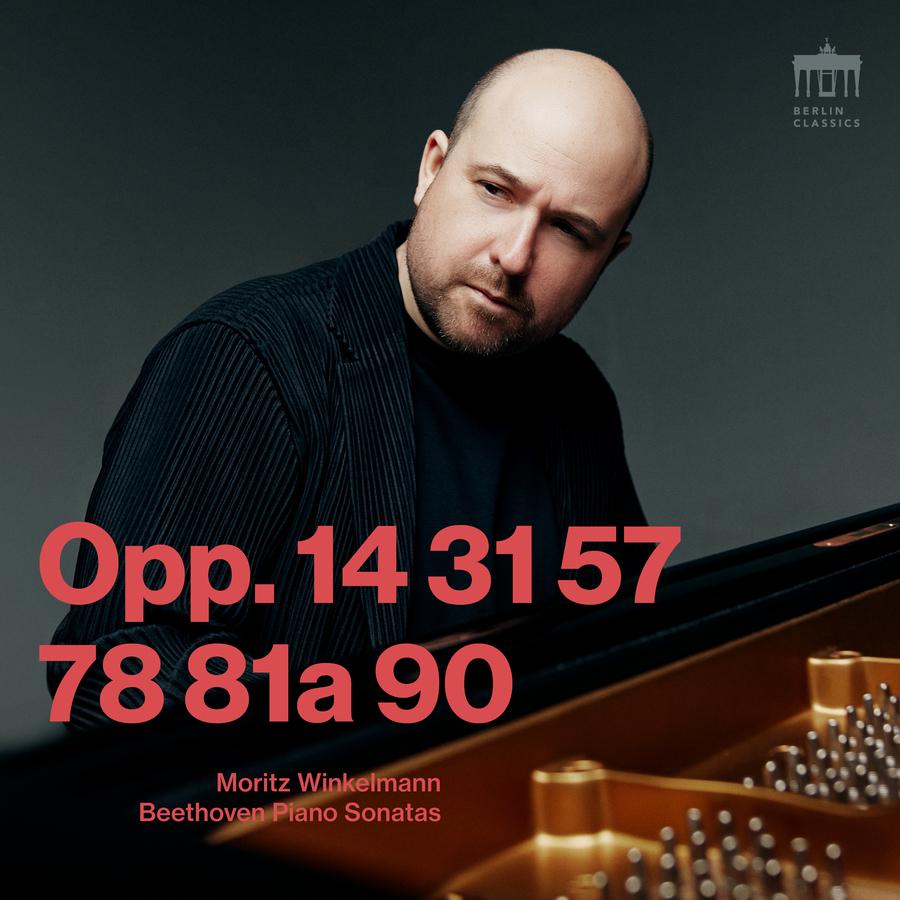


Pianist Moritz Winkelmann sets new standards: the recording of all 32 piano sonatas by Ludwig van Beethoven
Moritz Winkelmann, pianist from Stuttgart with a deep passion for the music of Ludwig van Beethoven, has dedicated himself to a very ambitious project: the recording of all 32 piano sonatas by the legendary composer. This monumental task is being realized in native Dolby Atmos for the renowned Berlin Classics label and promises a unique interpretation of this important repertoire.
Moritz Winkelmann’s passion for Beethoven is also based on a very personal story that has something to do with his teacher Leon Fleisher. Through him, he can draw a direct line from the student-teacher relationship to Beethoven. Leon Fleisher studied with Artur Schnabel, who in turn studied with the pianist Teodor Leschetizky. The pianist and composer Leschetizky studied in Austria with Carl Czerny, who was taught by Ludwig van Beethoven for three years. “That was one of the reasons why I really wanted to study with Leon Fleisher,” admits Moritz Winkelmann. And it was to pay off just a few years later: In 2015, Winkelmann won a prize at the famous Beethoven Competition in Bonn. For him, Beethoven’s music is not just a collection of masterpieces, but a reflection of humanist ideals. “I hear the ‘us’ in his music,” says Winkelmann, who played Beethoven’s pieces on the piano with his grandfather as a child. Even then, he knew that these sonatas “are not just pieces that you learn because you can play the piano quite well”, he says in the interview, adding: “This is about much more – this music is a cosmos of its own!”. His early encounter with Beethoven’s music shaped his life and his entire musical journey and inspired him to dedicate himself to the mammoth project of recording all the piano sonatas.
The decision was a natural progression for him. “Climbing this mountain, even just embarking on the journey, allows me to continue growing in the direction I want to grow,” he says. It was a decision that allowed him to focus on what he loves most and at the same time challenged him to push his limits.
His primary aim was to approach the pieces with “clean” ears and to break away from conventional interpretations. “I try to free myself from everything that ‘people’ do, that is ‘right’,” he says. This approach required a deep engagement with each individual work and an intense, unique relationship with Beethoven’s music.
The choice of instrument plays a very important role for the recordings. “Basically, I look for a grand piano that has the widest possible dynamic range and the warmest possible tone,” he explains. So far, he has always opted for the D model from Steinway & Sons, but he doesn’t rule out trying out other instruments. “You have to familiarize yourself, get to know the instrument and become friends.”
When asked about historical performance practices, Winkelmann replies that although he is intensively involved with stylistics, he does not commit himself exclusively to historical practices. “My interpretations are informed,” he emphasizes. He consults various Urtext editions and sometimes even Beethoven’s manuscripts in order to better understand the composer’s original intentions.
The recording process also determines the artist’s current everyday life. “The successive preparation, studying, learning and recording does something to me,” explains Winkelmann. “I’m in a permanent flow – not particularly anxious, but very concentrated and focused.” This intensive and long-standing relationship with the works and their composer enables him to constantly develop himself and his relationship with Beethoven.
The recordings are made in many individual recording sessions in Frankfurt’s Festeburgkirche and the Reitstadel in Neumarkt in the Oberpfalz, with sound engineer Markus Heiland from Tritonus Musikproduktion guaranteeing stable continuity at all times.
Moritz Winkelmann’s recording of the Beethoven sonatas promises not only a unique interpretation of this important repertoire, but also a deep insight into the world of the composer and his music. “I hope that those who didn’t know Beethoven will discover a new world,” he says. “And those who know and love him will find themselves confirmed.” His deep connection to Beethoven’s works and his pursuit of artistic excellence make this recording a milestone in the history of the interpretation of Beethoven’s piano sonatas.
Beethoven: Piano Sonatas Opp. 10 / 13 / 27 / 53 / 79 / 101 Moritz Winkelmann

Artist

Composer



Further information
Genre
Klassik
Klavier
Publication date
31.05.2024
Pianist Moritz Winkelmann sets new standards: the recording of all 32 piano sonatas by Ludwig van Beethoven
Moritz Winkelmann, pianist from Stuttgart with a deep passion for the music of Ludwig van Beethoven, has dedicated himself to a very ambitious project: the recording of all 32 piano sonatas by the legendary composer. This monumental task is being realized in native Dolby Atmos for the renowned Berlin Classics label and promises a unique interpretation of this important repertoire.
Moritz Winkelmann's passion for Beethoven is also based on a very personal story that has something to do with his teacher Leon Fleisher. Through him, he can draw a direct line from the student-teacher relationship to Beethoven. Leon Fleisher studied with Artur Schnabel, who in turn studied with the pianist Teodor Leschetizky. The pianist and composer Leschetizky studied in Austria with Carl Czerny, who was taught by Ludwig van Beethoven for three years. “That was one of the reasons why I really wanted to study with Leon Fleisher,” admits Moritz Winkelmann. And it was to pay off just a few years later: In 2015, Winkelmann won a prize at the famous Beethoven Competition in Bonn. For him, Beethoven's music is not just a collection of masterpieces, but a reflection of humanist ideals. “I hear the ‘us’ in his music,” says Winkelmann, who played Beethoven's pieces on the piano with his grandfather as a child. Even then, he knew that these sonatas “are not just pieces that you learn because you can play the piano quite well”, he says in the interview, adding: “This is about much more - this music is a cosmos of its own!”. His early encounter with Beethoven's music shaped his life and his entire musical journey and inspired him to dedicate himself to the mammoth project of recording all the piano sonatas.
The decision was a natural progression for him. “Climbing this mountain, even just embarking on the journey, allows me to continue growing in the direction I want to grow,” he says. It was a decision that allowed him to focus on what he loves most and at the same time challenged him to push his limits.
His primary aim was to approach the pieces with “clean” ears and to break away from conventional interpretations. “I try to free myself from everything that ‘people’ do, that is ‘right’,” he says. This approach required a deep engagement with each individual work and an intense, unique relationship with Beethoven's music.
The choice of instrument plays a very important role for the recordings. “Basically, I look for a grand piano that has the widest possible dynamic range and the warmest possible tone,” he explains. So far, he has always opted for the D model from Steinway & Sons, but he doesn't rule out trying out other instruments. “You have to familiarize yourself, get to know the instrument and become friends.”
When asked about historical performance practices, Winkelmann replies that although he is intensively involved with stylistics, he does not commit himself exclusively to historical practices. “My interpretations are informed,” he emphasizes. He consults various Urtext editions and sometimes even Beethoven's manuscripts in order to better understand the composer's original intentions.
The recording process also determines the artist's current everyday life. “The successive preparation, studying, learning and recording does something to me,” explains Winkelmann. “I'm in a permanent flow - not particularly anxious, but very concentrated and focused.” This intensive and long-standing relationship with the works and their composer enables him to constantly develop himself and his relationship with Beethoven.
The recordings are made in many individual recording sessions in Frankfurt's Festeburgkirche and the Reitstadel in Neumarkt in the Oberpfalz, with sound engineer Markus Heiland from Tritonus Musikproduktion guaranteeing stable continuity at all times.
Moritz Winkelmann's recording of the Beethoven sonatas promises not only a unique interpretation of this important repertoire, but also a deep insight into the world of the composer and his music. “I hope that those who didn't know Beethoven will discover a new world,” he says. “And those who know and love him will find themselves confirmed.” His deep connection to Beethoven's works and his pursuit of artistic excellence make this recording a milestone in the history of the interpretation of Beethoven's piano sonatas.
Tracklist - These are the tracks you will hear on the album
Beethoven: Piano Sonatas Opp. 10 / 13 / 27 / 53 / 79 / 101
Moritz Winkelmann
1
I. Allegro molto e con brio
2
II. Adagio molto
3
III. Prestissimo
4
I. Allegro
5
II. Allegretto
6
III. Presto
7
I. Presto
8
II. Largo e mesto
9
III. Menuetto. Allegro
10
IV. Rondo. Allegro
11
I. Presto alla tedesca
12
II. Andante
13
III. Vivace
14
I. Grave - Allegro di molto e con brio
15
II. Adagio cantabile
16
III. Rondo. Allegro
17
I. Allegro con brio
18
II. Introduzione. Adagio molto
19
III. Rondo. Allegretto moderato - Prestissimo
20
I. Andante
21
II. Allegro molto e vivace
22
III. Adagio con espressione
23
IV. Allegro vivace
24
I. Adagio sostenuto
25
II. Allegretto - Trio
26
III. Presto agitato
27
I. Etwas lebhaft und mit der innigsten Empfindung. Allegretto, ma non troppo
28
II. Lebhaft. Marschmäßig. Vivace alla Marcia
29
III. Langsam und sehnsuchtsvoll. Adagio, ma non troppo, con affetto
30
IV. Geschwinde, doch nicht zu sehr, und mit Entschlossenheit. Allegro